A Unique Architectural Landscape at Columbia Basin College
Visitors to Columbia Basin College’s Pasco campus often experience a shared aesthetic among the various academic buildings, each contributing to the campus’s visual harmony. The architecture showcases a coherent design language, particularly evident in the pitched roofs adorned with blue metal sheeting. This distinctive feature links several key structures, including the Center for Technical Education and the A & B buildings, with the latter housing the business education department and administrative offices.
The landscape also features rounded structural elements prominently seen in the library and the Richard Cummins Social Science and World Languages Center (commonly referred to as the D or SWL building). Nearly all the buildings are clad in a neutral beige stucco or brick, establishing a cohesive color palette that promotes unity across the campus.
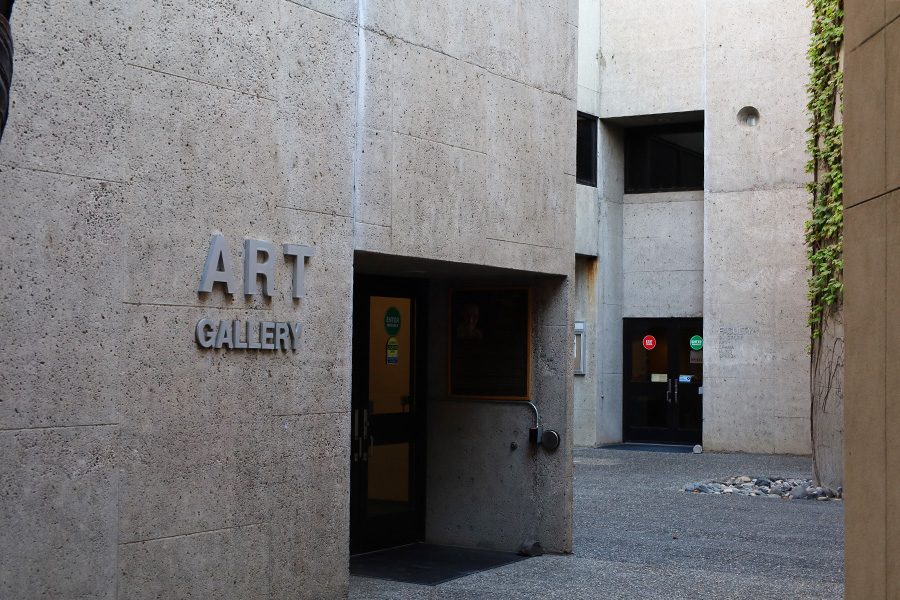
However, amid this architectural coherence, the P Building stands out dramatically. With its brutalist-inspired design, this block structure is characterized by exposed pebble concrete, skillfully enveloped in ivy. Brian Dexter, assistant vice president for campus operations, emphasized its uniqueness, stating, “It’s a beautiful building from an architectural standpoint. It’s a very unique building.”
The Legacy of the P Building
The P Building, built in 1971, has served the college for over 55 years and currently houses the School of Arts, Humanities & Communication. With its 31,000 square feet, the facility includes the Esvelt Gallery, which showcases regular art exhibits, a 292-seat indoor theater, a black box theater, and an outdoor amphitheater added about a decade ago.
Despite its striking design, the building has not aged well in terms of functionality and technology. Accessibility issues abound, with many sections, including offices and classrooms, posing challenges for individuals with wheelchairs or limited mobility. Additionally, its dense concrete walls are not conducive to modern Wi-Fi needs, which are essential for contemporary educational environments.
Architecture firm Integrus, appointed for the pre-design work regarding the new building, has pointed out the existing challenges. They noted, “While your existing facility was thoughtfully designed and remains a distinctive presence on campus, it no longer meets the evolving needs of today’s students, performers and audiences.” The limitations of the P Building hinder the growth potential of the college’s performing and visual arts programs.
Future Plans for a New Arts Building
Recognizing these shortcomings, Columbia Basin College is moving forward with plans to replace the P Building, having secured $54.5 million from state lawmakers during the 2025 legislative session. Although the new structure’s specific design remains up in the air, the college’s leadership is adamant that it will combine unique architectural qualities with essential functionality.
Michael Lee, the college’s vice president for instruction, highlighted the importance of accommodating growing instructional needs as the college has expanded since the P Building was constructed. Meanwhile, Susan Shelangoskie, dean for arts, humanities, and communication, clarified that while initial concepts were submitted as placeholders to secure funding, detailed designs won’t commence until later this year.
Architectural Vision and Collaboration
Integrus aims to create a high-performing facility that fosters creativity and collaboration among students. Their vision articulates a space that not only meets educational needs but also enriches the broader community’s engagement with the college. They have a history of successful arts-focused projects, such as the Music & Arts Center at Wenatchee Valley College, which bolsters confidence in their ability to deliver a distinctive new building.
Tentatively, CBC officials plan to construct the new arts building just north of the P Building, currently a parking lot. The design process has a projected timeline that could see the new building ready by 2028. Dexter emphasized the aspiration for architectural uniqueness, stating, “We don’t want just another classroom building; we want this to continue to be a unique structure on campus. We’re not building a box. We’re not building a Costco.”
Honoring the Past While Embracing the Future
As the plans unfold for the new facility, the P Building faces an inevitable demolition once the new arts center is complete. However, CBC officials are exploring creative ways to honor the legacy of the P Building. Ideas include transforming parts of its concrete structure into a garden or incorporating artistic murals in its successor, allowing the spirit of the building to endure in some form.
Lee articulated this sentiment perfectly, suggesting that “artistic representations would be a natural way of doing that.” Through these initiatives, the college aims to celebrate its architectural heritage while paving the way for an innovative future.