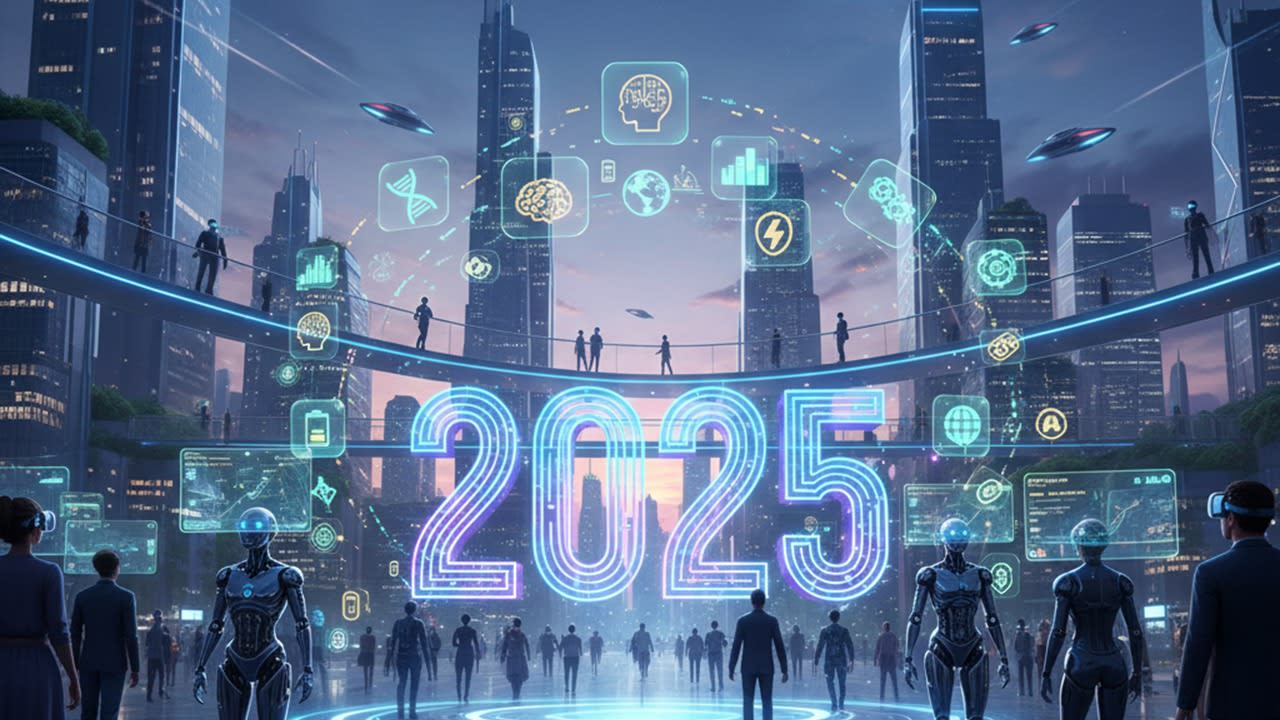
Technology Trends Defining 2025: A Glimpse into Our Future
Technology is evolving faster than ever, and 2025 is set to be a defining year. With advancements in artificial intelligence, automation, connectivity, immersive experiences, and sustainable innovation, the world is moving toward a smarter, more efficient future. These transformations will impact everything—from how we work and communicate to how we travel, shop, and stay healthy. Let’s explore five major tech trends that are poised to shape our lives in 2025.
Introduction: The Tech Revolution of 2025
The year 2025 represents a pivotal moment where various technological advancements converge. The increasing adoption of AI, the rise in global connectivity, and urgent environmental priorities are driving a collective push towards innovation. Businesses, governments, and individuals are now more adaptable and willing to embrace digital solutions than ever before. The result is a world where technology seamlessly integrates into our daily lives—streamlining tasks, enhancing productivity, and addressing global challenges with smarter solutions.
1. Artificial Intelligence Becomes Mainstream
Artificial intelligence is rapidly transitioning from a sci-fi dream into an everyday reality. By 2025, AI will be deeply woven into the fabric of our lives, featuring prominently in various applications. Expect personal assistants to enhance their context-awareness, allowing them to better anticipate user needs. Content generation will no longer solely be the domain of humans; AI will adeptly create articles, code, and even art.
In the realm of healthcare, predictive analytics powered by AI will elevate medical diagnoses, making them quicker and more precise. Cybersecurity will also benefit from AI’s capabilities, with instant threat detection safeguarding sensitive data. Meanwhile, customer service will experience a revolution through smart chatbots, delivering faster and more personalized assistance. Ultimately, AI will be omnipresent—from your smartphone and vehicles to hospitals and industrial settings, enhancing efficiency and offering tailored experiences.
2. Rise of Hyper-Automation Across Industries
Hyper-automation is set to take the business world by storm in 2025. This approach combines AI, machine learning, and advanced robotics to automate tasks across entire workflows. Companies will be able to eliminate repetitive tasks—enabling human employees to focus on more complex responsibilities.
Expect to see automated robotics take on a larger share of warehouse operations and manufacturing processes. AI agents and chatbots will also become integral components of customer support, providing assistance faster and around the clock. Furthermore, digital twins—virtual replicas of real-world operations—will allow businesses to optimize processes before implementing changes in reality. Industries such as finance, healthcare, and logistics will increasingly rely on automated systems, resulting in heightened accuracy, reduced costs, and accelerated operations.
3. 5G and Beyond — Faster, Smarter Connectivity
We are entering a new era of hyper-connectivity, driven by the widespread adoption of 5G technology. By 2025, high-speed internet will facilitate seamless experiences across various domains. Look forward to ultra-fast internet speeds that enhance video streaming quality and improve online gaming environments.
Moreover, 5G will revolutionize smart home ecosystems, allowing devices to communicate with one another instantaneously. Autonomous vehicles will capitalize on low-latency networks for real-time decision-making, while the performance of internet-connected devices—known as the Internet of Things (IoT)—will achieve new heights. Enhanced connectivity translates to more secure, responsive, and efficient digital interactions.
4. Growth of Immersive Technologies (AR, VR, and Mixed Reality)
Immersive technologies are transitioning from niche applications to mainstream use in 2025. Virtual Reality (VR) will play a crucial role in remote training and education, breaking down geographic barriers and providing rich learning experiences. Augmented Reality (AR) will enhance shopping, enabling consumers to virtually try on clothing and accessories before making a purchase.
In fields such as design and architecture, mixed reality will foster collaboration and innovation by blending digital information with the physical world. The emergence of virtual offices will redefine remote work, enabling immersive experiences that mimic in-person interactions. In healthcare, VR will serve as a tool for therapy, surgeries, and rehabilitation, expanding the horizons of medical treatment.
5. Sustainable Tech Innovations Driving a Greener Future
As environmental concerns gain prominence, sustainable technology will become a focal point for global innovation. In 2025, expect groundbreaking advancements in renewable energy sources such as solar, wind, and hydrogen, playing a significant role in reducing dependency on fossil fuels.
Electric and eco-friendly vehicles will gain traction, and smart energy grids will bring efficiency to power distribution. Innovations in biodegradable materials and green manufacturing methods will become more commonplace, while carbon-capture technologies will assist in mitigating climate change. Companies will increasingly embed eco-friendly solutions into their core business strategies, fostering a cleaner and more sustainable world.
How These Trends Will Transform Everyday Life
By 2025, everyday life will undergo significant transformations. Smart assistants will proactively anticipate user needs, reducing the number of steps required to accomplish tasks. Homes will become more automated, controlling lighting, temperature, and security systems seamlessly.
Virtual reality meetings and immersive collaboration tools will replace many in-person interactions, fostering team synergy irrespective of geographical boundaries. Faster networks will facilitate on-demand collaboration, while health monitoring devices will provide users with real-time insights into their well-being. As technology becomes more integrated into daily routines, it will ultimately enhance convenience, safety, and overall productivity.
Opportunities for Businesses and Entrepreneurs
Businesses that quickly embrace these trends will find numerous opportunities for growth. Startups will harness the power of AI to develop smarter, more intuitive applications. Companies across various sectors can capitalize on automation to streamline operations and cut costs. Retailers will leverage AR to create immersive shopping experiences that engage consumers on a deeper level.
The burgeoning green tech sector will create new markets and job opportunities, incentivizing companies to innovate responsibly. Enhanced connectivity will enable businesses to expand their digital offerings and engage customers more effectively. As 2025 approaches, the stage is set for an extraordinary revolution in how we live and work.
Challenges and Ethical Considerations
However, along with the promise of technological advancement comes a series of challenges. As AI continues to integrate into our lives, ethical concerns surrounding bias and accountability will become more pronounced. Privacy risks associated with extensive data collection will demand robust regulatory frameworks to protect individuals.
The threat of job displacement due to automation looms large, necessitating a proactive approach to workforce reskilling and support. Additionally, security concerns related to connected devices must be addressed to safeguard personal data. Finally, the environmental impact of producing and disposing of electronics remains a significant issue that warrants urgent attention.
Navigating these challenges responsibly will be essential as we endeavor to adopt and integrate these revolutionary technologies into our lives and society.