Have you ever pondered how student-led initiatives can transform communities and industries? At the University of Miami, that transformation is in full swing, driven by the University Student Startup Accelerator (USTAAR). This innovative program, funded by alumni Angel and Victor Alvarez, is empowering budding entrepreneurs with $100,000 grants to turn visionary ideas into viable businesses. Let’s explore three standout startups from this venture that address personal safety, sustainable farming, and rehabilitation for amputees.
An App That Makes Safety Social
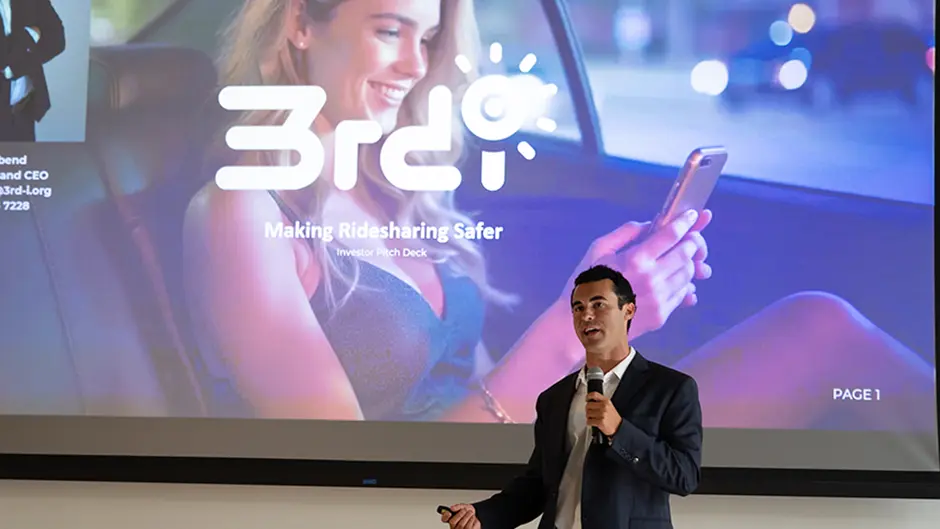
Imagine going for a run in a serene, wooded area—but with a nagging fear of the unexpected. This was the reality for Dillon Abend, a student at the University of Miami, who would video-call a friend during his nighttime jogs for safety. Yet, he realized that if trouble struck, his friend would have no idea of his exact location. This personal experience sparked the inception of 3rd-i, a safety app designed to create a social safety net.
With dynamic input from peers, safety survivors, and families targeting this issue, Abend shaped 3rd-i to seamlessly integrate safety into users’ daily social interactions. The app allows users to live-stream their location to loved ones, discreetly connect with emergency services, and share incidents anonymously on a community safety feed. “Safety should be habitual and contextually connected,” Abend states, emphasizing how traditional methods lack real-time solutions. Since its launch, 3rd-i has received enthusiastic feedback and is poised to expand to over 50 campuses, utilizing a network of 120 product ambassadors and partnerships with safety nonprofits.
Precision Farming Solutions
While 3rd-i tackles personal safety, another innovative startup, Smart Aerosol Technologies (SmArT), delves into sustainable agriculture. Led by Shruti Choudhary—whose farming roots trace back to her grandfather in India—SmArT aims to revolutionize how farmers cultivate crops. Utilizing nanoparticle fertilizers, this agricultural tech company not only enhances crop yield but also conserves water and reduces transportation costs.
Choudhary highlights a significant challenge in modern agriculture: fertilizer runoff, where traditional fertilizers often go to waste. “Farmers worldwide face mounting pressures to sustainably feed a growing population,” she explains. With assistance from USTAAR, Choudhary secured additional funding of $125,000 from the eMerge Americas Startup Showcase and gained recognition at MIT’s Water, Food, & Agriculture Innovation Prize competition. SmArT is gearing up for greenhouse trials later this fall, with its eyes set on real-world impact, starting with partnerships such as the one with DiMare Homestead for field testing.
Rehabilitation Through AR
Continuing the theme of innovation, the trio of Ben Broyles, Elissa Cimino, and Aidan Scott-Van Deusen developed SimuStride, an augmented reality rehabilitation system aimed at aiding lower-limb amputees. Co-developers, all students studying biomedical engineering, recognized that patients often face prolonged waiting periods for prosthetics after amputation. This delay can hinder recovery and lead to phantom limb pain.
“SimuStride fills that gap effectively, allowing rehabilitation to commence just days post-surgery,” notes Broyles. The system employs a sleeve over the residual limb that detects electrical activity in the muscles. Through augmented reality, users visualize a virtual prosthesis and control its motion based on real-time muscle data, facilitating regain of motor skills and fostering independence. As SimuStride prepares for a pilot study with UHealth, the team has garnered accolades, including the National Institutes of Health DEBUT Challenge’s Rehabilitative and Assistive Technologies Prize.
From Idea to Innovation
3rd-i, SmArT, and SimuStride symbolize just a fraction of the remarkable student-driven innovations nurtured by USTAAR, which, in its ongoing pitch competitions, allows finalists to secure $100,000 grants to elevate their projects from inception to prototype. Participating in these competitions not only boosts the startups financially but also enriches them with mentoring from experienced entrepreneurs and faculty.
USTAAR’s director, Suhrud Rajguru, emphasizes the critical role of early investment and mentorship in the lifeblood of startups. With a goal of inspiring creativity across multiple domains—from healthcare to social safety, agriculture to technology—Rajguru marvels at the diversity and ingenuity manifested by the student entrepreneurs. “Our students are not just utilizing their academic knowledge; they’re driving real-world change,” he highlights.
Many winners attribute their achievements to the robust ecosystem facilitated by USTAAR. Mentorship, credibility, and access to resources have been pivotal for them. “Philanthropy and programs like USTAAR provide us with the credibility needed to attract partners and resources, significantly enhancing our capacity for innovation,” remarks Abend. Choudhary echoes this sentiment, referencing how these opportunities helped shape her business model leading to her success across various pitch competitions.
In a dynamic landscape where innovation is key, the stories of these student-led startups illustrate how the USTAAR initiative is not just funding ideas, but catalyzing a wave of entrepreneurship that fosters resilience, community, and sustainable solutions. As USTAAR continues to evolve, we can only anticipate the next groundbreaking solutions that will emerge from the minds of student innovators.