Global Market Turmoil: A Deep Dive into Recent Trends
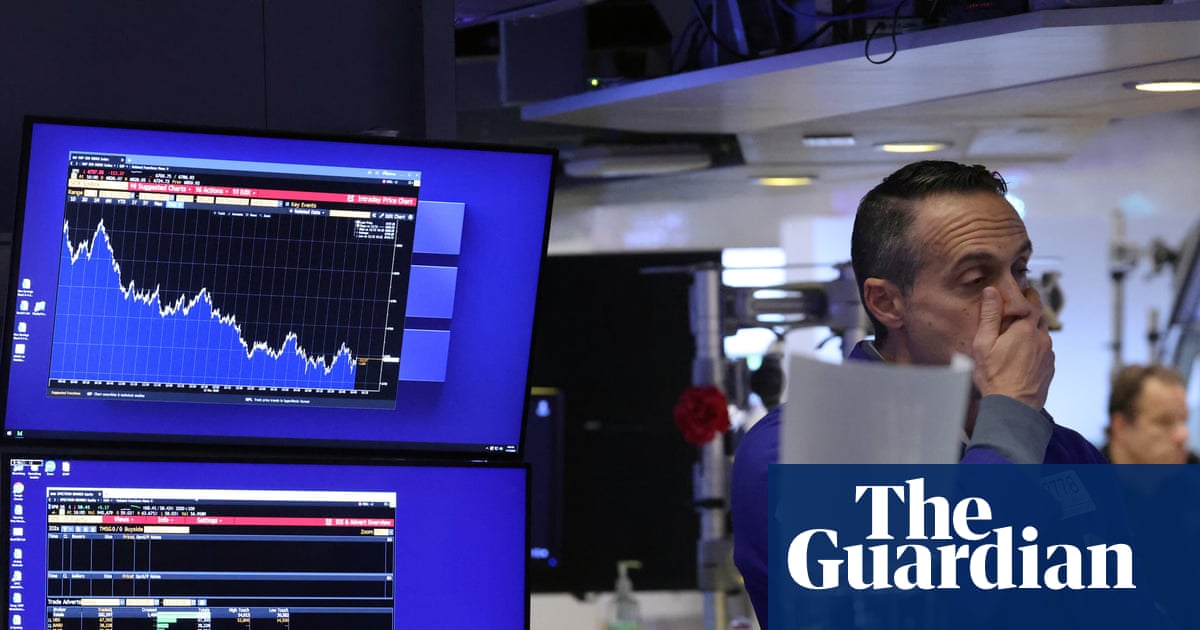
Global markets experienced another day of tumultuous trading following a significant tech sell-off, marking Wall Street’s worst performance in a month. Compounding the situation, disheartening economic data from China revealed an unprecedented decline in investment, intensifying concerns among investors.
UK Market Reaction
In London, the FTSE 100 index fell by 1.1%, closing down nearly 100 points at 9,698. This decline was primarily driven by a notable downturn in major banking stocks. Barclays, Lloyds, and NatWest witnessed drops ranging from 2.7% to 3.6%, reflecting a broader hesitancy among investors. Earlier in the week, the UK blue-chip index had been on the verge of achieving the landmark 10,000-point mark for the first time, but the recent downturn has stymied that momentum.
The British pound also experienced a decline against the dollar, dipping nearly 0.5% to $1.31. This drop followed an unexpected announcement from Chancellor Rachel Reeves, who abandoned previously planned income tax increases in the upcoming budget. The move, while aimed at easing fiscal pressure for citizens, has left investors pondering its long-term implications for the UK economy.
A Look Across the Atlantic
Meanwhile, US markets faced renewed pressure. On Friday, the benchmark S&P 500 opened lower but managed to close flat, signaling a volatile trading environment. Conversely, the Dow Jones Industrial Average dipped by 0.7%, while the tech-heavy Nasdaq Composite initially plummeted by 1.8% but regained some ground to finish up by 0.1%.
This turbulent atmosphere in US markets is reflective of a broader unease regarding the tech sector, as exemplified by the notable decline in companies like Nvidia. Once celebrated for its prominence in the AI space, Nvidia fell 3.6% after investors began reassessing the valuation of AI-focused businesses in light of SoftBank’s decision to sell its entire stake in the company. The dim outlook on AI investments has contributed to a sense of caution that resonates across the markets.
Trends in Europe and Asia
European markets joined in the downturn, with the pan-European Stoxx 600 sliding by 0.9% as trading opened. Specific national indices showed varying degrees of decline: France’s Cac 40 decreased by 0.54%, while Germany’s Dax fell by nearly 0.9%.
Asia was similarly affected, with Japan’s tech-laden Nikkei falling by 1.8%. South Korea’s Kospi plunged 2.6%, and Australia’s market experienced a 1.5% drop. The turbulence in Asian markets can be traced back to a tough day in US equities, as confirmation of overvaluation fears swept through the sector.
Impacts of Chinese Economic Data
Adding to the global unease, fears regarding a slowdown in the Chinese economy fueled further turmoil. Newly released figures revealed a shocking 1.7% contraction in fixed-asset investment over the first ten months of the year—the largest decline on record. This news compelled global traders to reassess the viability of their investments in light of the Chinese economy’s deterioration.
China’s CSI 300 index fell by 0.7%, while Hong Kong’s Hang Seng Index contracted by 0.9% and Taiwan’s Taiex dropped 1.4%. These movements signify a growing apprehension about the future trajectory of one of the world’s largest economies and its potential ripple effects across global markets.
Ongoing Concerns in the US
In the United States, uncertainty looms over the economic implications of a prolonged federal government shutdown—the longest in history. This standoff has forced the government to delay the release of crucial data regarding inflation and job markets, further contributing to the jittery atmosphere.
Analysts have indicated an increasing caution among officials regarding the likelihood of a rate cut by the Federal Reserve next month, following a series of mixed signals from policymakers. Jim Reid of Deutsche Bank noted that the market sentiment has fluctuated significantly. Relief over the end of the government shutdown struggles against worries related to AI valuation and the potential for a more dovish Federal Reserve stance.
Expert Insights
Kyle Rodda, a senior financial analyst at Capital.com, explained the disparity in market reactions. He pointed out that while Asian markets experienced notable declines, they were not as severe as those in the U.S., largely due to the inherently higher valuations in American markets. He echoed concerns that the AI sector’s momentum is dwindling in light of disappointing returns on investment, which has left many investors in a state of hesitation.
As markets continue to grapple with these multifaceted challenges, the impact of changing fiscal policies, economic indicators, and global interdependencies will remain focal points for traders and analysts alike. With various indicators pointing toward a period of significant volatility, investors are keenly watching for signs of stability in the weeks ahead.