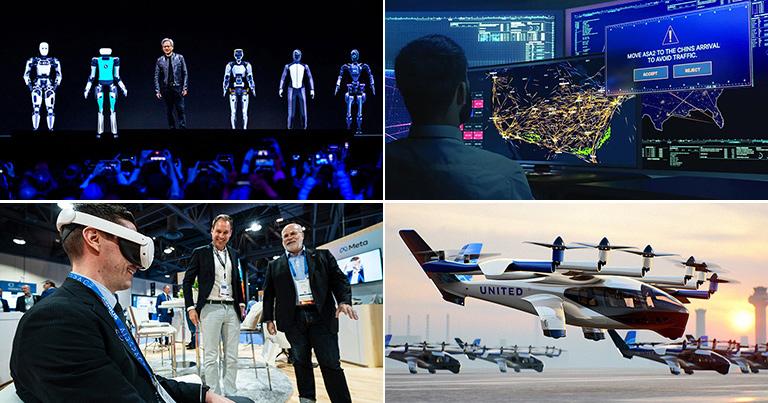
Trends in Air Transport for 2025: A Technological Evolution
The beginning of a new year is always a time for reflection and forward-looking insight, especially in an industry as dynamic as air transport. Following the recent CES 2025, this year brings a plethora of exciting trends and emerging technologies poised to redefine how we experience air travel. From robotics and AI to sustainability and immersive technologies, here are the key trends likely to shape passenger experiences and industry performance over the next twelve months.
Robotics and Automation
The integration of robotics and automation in air travel continues to accelerate, revolutionizing airport operations and passenger services. Innovations in robotic technology have drastically improved baggage handling, aircraft maintenance, and customer service. Airports are increasingly adopting autonomous vehicles and robotic assistants to streamline workflows.
For instance, personal assistant robots showcased at CES 2025, like Samsung’s Ballie, offer enhanced AI capabilities. These robots could soon greet passengers at check-in and provide a VIP touch in lounges. With Munich Airport introducing the JEEVES service robot and Emirates utilizing the Sara robotic check-in system, the trend toward automation in airports is evident.
Notably, Cincinnati/Northern Kentucky International Airport is leading the charge in autonomous baggage transport with the Auto-DollyTug initiative. Similarly, Pittsburgh International Airport has conducted several trials of autonomous technologies, paving the way for wider adoption within the industry.
Artificial Intelligence, Generative AI, and Data Analytics
Artificial Intelligence (AI) remains a centerpiece of technological evolution in air transport. From optimizing flight paths to enhancing passenger experiences, AI is rapidly transforming operations. The emergence of Generative AI (GenAI) further empowers airlines to offer personalized services and increased efficiency.
AI-driven predictive analytics is essential for minimizing disruptions and anticipating maintenance needs. For example, Alaska Airlines recently launched a Generative AI flight search tool that inspires travelers by curating trip options. Companies such as Fraport are also using AI to redesign work environments, illustrating AI’s potential for reshaping operational efficiency.
Internet of Things (IoT) and Private Wireless Networks
The IoT is becoming central to airports and airlines, necessitating significant advancements in digital infrastructure to handle the massive data influx from connected devices. High-speed networks and edge computing systems are crucial for real-time data processing.
Miami International Airport (MIA) is turning into a "Smarter Airport" through its comprehensive IoT framework, which aims to improve service efficiency and enhance passenger experiences. Private Wireless Networks (PWNs) are also gaining traction, offering improved security and operational efficiency. For instance, Fraport has successfully implemented a Private 5G Network, which supports various innovative applications, including autonomous vehicles on the apron.
Immersive Technologies: Augmented Reality, Virtual Reality, and Extended Reality
Immersive technologies like Augmented Reality (AR) and Virtual Reality (VR) are transforming training methods within the aviation sector. These technologies provide realistic simulation environments for pilot training, making emergency drills more effective and immersive.
On the passenger experience front, Lufthansa has embarked on a pioneering journey by launching an Extended Reality (XR) Inflight Experience. This allows passengers to engage with mixed-reality entertainment options, setting new standards in premium cabin offerings.
Digital Displays Reinvented
Digital displays are evolving into eye-catching interactive mediums that will shape future airports. Samsung’s ‘Vision AI’ and LG’s SIGNATURE OLED T model are examples of how digital signage can create engaging experiences. These innovations guide passengers through various processes, from security checks to retail environments, enriching the overall travel experience.
Personalization
As travelers demand more personalized experiences, airlines are responding with innovative solutions that cater to individual needs. Delta’s new AI-powered tool, Delta Concierge, facilitates a more tailored travel experience by leveraging Generative AI to comprehend customer preferences in real-time.
Meanwhile, Lufthansa’s Allegris long-haul travel experience focuses on customization, allowing travelers to choose various aspects of their journey, thus propelling personal engagement to new heights.
Collaborative Innovation
Future Travel Experience (FTE) believes that collaborative innovation is key to driving change in the aviation industry. By initiating partnerships through the FTE Accelerating Collaboration & Engagement (ACE) platform, stakeholders can work together more effectively to address industry challenges.
Collaborative efforts, like the BOOST initiative focusing on baggage handling innovations, emphasize the power of collective intelligence in developing efficient solutions.
Biometrics and Digital Identity
The pandemic accelerated the adoption of biometric technologies, shaping a future where contactless travel becomes the norm. Airports are increasingly utilizing biometric systems for seamless movement through security and boarding. Notably, Fraport has implemented a robust biometric system that allows passengers to utilize facial recognition throughout their travel journey.
Sustainability
Sustainability remains a core focus within the aviation industry as it commits to achieving net-zero carbon emissions by 2050. From electric and hybrid aircraft to sustainable aviation fuel (SAF), innovations address environmental concerns while maintaining operational efficacy.
Airlines such as Alaska Airlines and organizations like Avinor are actively engaging in initiatives aimed at testing low-emission aviation technologies, demonstrating the industry’s commitment to fostering a greener future.
Accessibility
Making air travel more accessible continues to be a focal point, with technology playing a crucial role. Innovations in autonomous personal mobility devices are emerging across airports, enhancing the travel experience for passengers requiring special assistance. Collaboration with disabled communities is essential for tailoring solutions that meet diverse needs.
Airlines’ Journey to Becoming Fully-Fledged Digital Retailers
As airlines navigate the complex digital landscape, they are increasingly positioning themselves as digital retailers. The industry is moving toward personalized, dynamic offers that adjust in real-time, supported by advanced technologies.
Examples include American Airlines’ push for NDC adoption and Lufthansa’s adoption of new technology partners. This evolution aims to elevate customer experiences while streamlining retail processes.
Urban Air Mobility
Urban Air Mobility (UAM) is gaining momentum, highlighted by Delta’s collaboration with Joby for air taxi services. Airports worldwide are exploring eVTOL networks to revolutionize urban transportation. With increasing investment in this space, the UAM trend is set to disrupt traditional models of travel.
These trends are just the tip of the iceberg as air transport continues to evolve. The collaboration of technology and human insight promises a transformative experience for travelers, making air travel more efficient, personalized, and environmentally friendly.