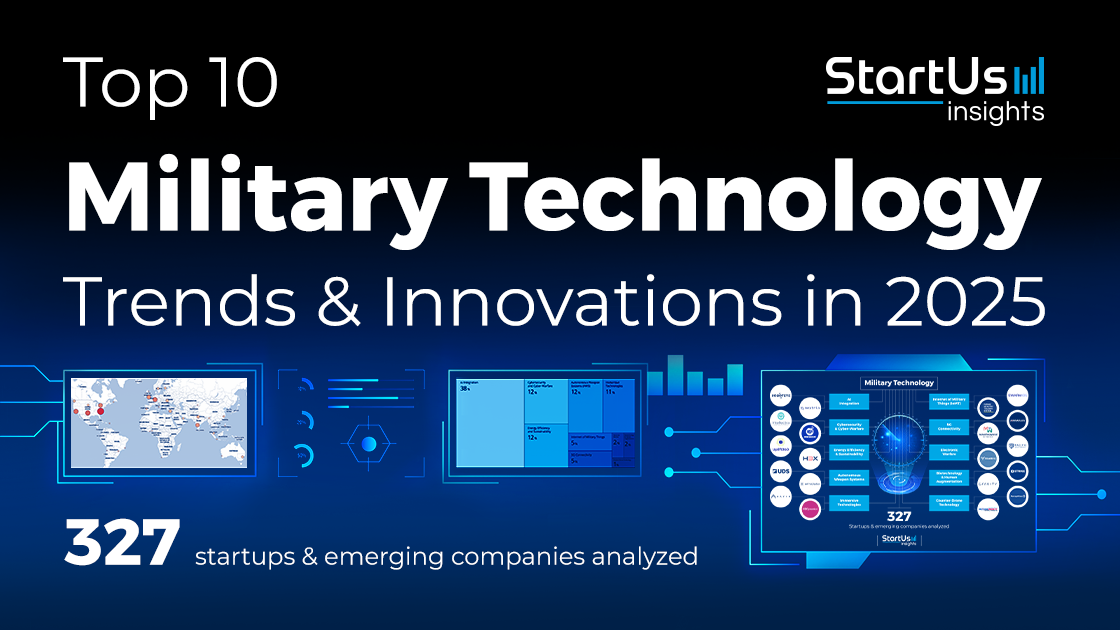
Accelerate Productivity in 2025: Military Technology Trends
As we step into 2025, the landscape of military technology is undergoing rapid transformation driven by advancements in artificial intelligence (AI), connectivity, and autonomous systems. This article explores pivotal trends shaping defense operations and offers insights into how these innovations are set to redefine military efficiency and responsiveness.
The Role of AI Integration in Defense
AI integration is revolutionizing how military operations are conducted. In 2024, the AI in military market was valued at approximately USD 9.31 billion, with projections indicating a robust growth rate of 13.0% CAGR from 2025 to 2030. This surge is spurred by increasing defense budgets and the growing implementation of AI-driven predictive analytics.
The U.S. Department of Defense has earmarked an impressive USD 1.8 billion for AI and machine learning initiatives over the fiscal years 2024 and 2025, emphasizing the significance of secure AI platforms. AI enhances decision-making, optimizes logistics, and automates surveillance tasks, significantly improving military readiness.
Examples include companies like RobotEye, which develops AI-driven surveillance systems capable of monitoring remote areas autonomously, and Nextria, which provides secure generative AI solutions for organizational applications.
Cybersecurity and Cyber Warfare
As geopolitical tensions prevail, cybersecurity has become an indispensable component of military strategy. The defense cybersecurity market is projected to reach USD 49.4 billion by 2028, fueled by the increasing reliance on digital infrastructure and state-sponsored cyber threats.
In 2025, the U.S. Department of Defense allocated USD 64.1 billion for information technology, highlighting a focus on enhancing cybersecurity resilience. The increasing digitization of warfare drives the need for advanced cybersecurity solutions.
For instance, Intellectra focuses on embedded security solutions, while RizeForce integrates AI and IoT technologies to bolster defense capabilities, enabling data management systems that enhance operational security.
Energy Efficiency and Sustainability
A growing emphasis on energy efficiency is reshaping military logistics. The military vehicle electrification market is expected to reach USD 14.27 billion by 2029, expanding at a CAGR of 15.4%. The U.S. Department of Defense aims to source at least 25% of its energy from renewable sources by 2025.
Technological advancements in battery power and renewable energy systems are optimizing military operations, enabling reduced logistical challenges in remote areas. Innovations include hybrid systems and AI-driven features designed to improve battlefield mobility. Prominent players like Uplift360 develop sustainable recycling processes for military materials, while H3X Technologies focuses on electric propulsion systems tailored for defense applications.
Autonomous Weapon Systems
The market for autonomous military weapons is projected to expand to USD 24.07 billion by 2028, driven by advancements in AI and machine learning. Autonomous systems, or AWS, enhance operational efficiency, performing tasks that traditionally required human intervention.
However, the ethical implications surrounding autonomous weapons systems demand consideration. The U.N. has engaged in discussions about the governance of these technologies, signifying the complexities inherent in their deployment. Unmanned Defense Systems, for example, is developing UAVs for multiple defense applications, emphasizing the growing reliance on automation in military strategy.
Immersive Technologies for Training
The military’s adoption of immersive technologies like virtual reality (VR) and augmented reality (AR) is transforming training methodologies. The market is anticipated to grow from USD 12.80 billion in 2025 to USD 92.17 billion by 2034, showcasing a CAGR of 24.52%.
Training systems such as HAVIK offer high-fidelity virtual reality environments for combat scenarios. These systems enhance situational awareness and tactical planning, providing soldiers with realistic, repeatable training experiences, significantly reducing costs and risks associated with live-fire exercises.
The Internet of Military Things (IoMT)
The IoMT is gaining traction, with the market set to grow from USD 487.08 billion in 2025 to approximately USD 1.21 trillion by 2034. The integration of IoT technologies is enhancing efficiency in military operations, from predictive maintenance of equipment to real-time analytics for battlefield management.
Military forces are increasingly exploring the convergence of IoT with 5G technology, facilitating high-speed communication for autonomous systems. Noteworthy startups like SWARMIOS focus on swarm intelligence, enabling coordinated operations through unmanned systems, while Future Infantry Tactical Systems develop training solutions using AIoT to create immersive combat scenarios.
5G Connectivity in Defense
5G technology is crucial in advancing battlefield connectivity, projected to grow from USD 1.58 billion in 2025 to USD 4.24 billion by 2030. This rapid adoption of private 5G networks enhances military operations through improved data transmission, situational awareness, and operational command.
Innovative startups like AiRANACULUS are pioneering intelligent networking solutions to optimize RF and network performance, supporting real-time applications in military scenarios. Meanwhile, Mantiswave Networks is delivering customized 5G solutions catering specifically to defense needs.
Electronic Warfare
The electronic warfare market is poised to reach approximately USD 44.8 billion by 2032, fueled by the integration of cyber-electronic convergence and advancements in signal processing. Modern military operations necessitate sophisticated electronic warfare capabilities to neutralize emerging threats and secure communication channels.
Companies like Pacific Defense are developing open architecture systems to support electronic warfare, while Ukrainian startup BlueBird integrates UAVs with electronic disruption tools, enhancing operational effectiveness in challenging environments.
Biotechnology and Human Augmentation
The biotechnology sector within defense is projected to reach USD 545.1 billion by 2028, encompassing advancements in exoskeletons and cognitive enhancement tools meant to improve soldier performance and ensure their survivability in the field.
Startups like Strike Photonics are pioneering diagnostic technologies that significantly improve pathogen detection, while Gravity Industries is developing jet-powered suits that provide soldiers with unprecedented mobility and operational advantages.
Counter-Drone Technology
In response to rising drone threats, the counter-drone market is expected to grow rapidly, reaching nearly USD 15.58 billion by 2033. The increasing sophistication of unmanned aerial systems used for reconnaissance and attacks drives demand for effective countermeasures.
Startups like PerceptView are enhancing surveillance capabilities through integrated tracking systems, while Boresight develops unmanned aerial targets to support training for counter-drone operations.
Exploring Innovations
Military technology is evolving at an unprecedented pace, with AI, connectivity, and automation leading the charge. These trends are not just improving efficiency; they are fundamentally transforming military operations to be more adaptive and resilient. Keeping ahead of these developments is crucial for defense agencies looking to enhance their technological capabilities and operational effectiveness. The landscape in which these innovations emerge will shape the future of warfare, ensuring that military forces maintain their strategic advantage in an increasingly complex world.